Uncategorized
Expert Embroidery Digitizing Services for Your Business
May
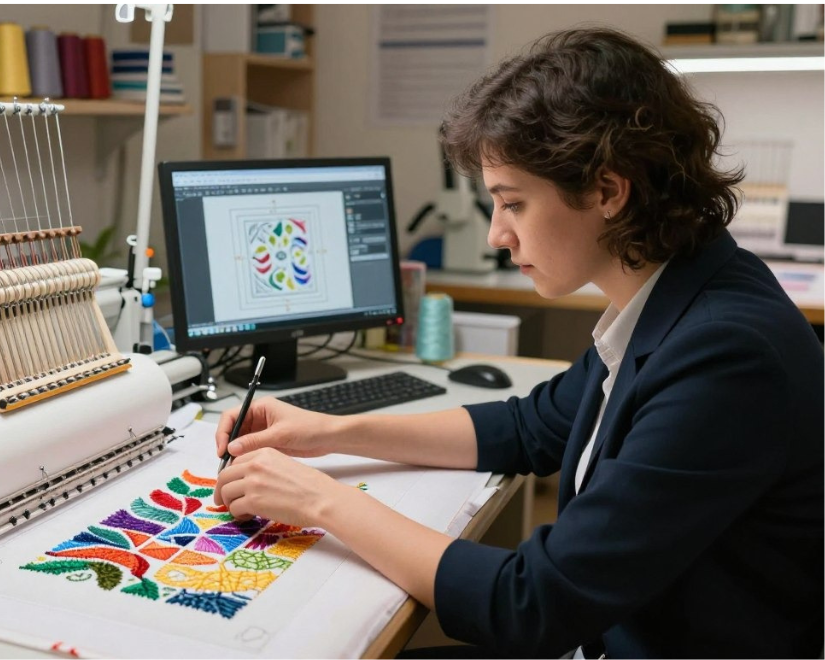
In today’s market, your brand’s look is key. Whether for a team or promotional items, your logo’s placement is crucial. Professional embroidery digitizing services connect your digital art to the final product.
Quality files mean every stitch is perfect. With expert help, your logo will look sharp on all clothes. This boosts your image and client trust.
Finding the right partner is vital for success. Top-notch work avoids costly mistakes. Reliable results give your brand a polished look that shows your values.
Key Takeaways
- Professional file conversion is the foundation of high-quality apparel branding.
- Expert technical support ensures consistent logo reproduction on various fabrics.
- Precision in stitch paths prevents common production errors and saves costs.
- A polished appearance on uniforms enhances your company’s professional reputation.
- Investing in quality technical work provides long-term value for your marketing gear.
Understanding Professional Embroidery Digitizing Services
Embroidery digitizing services connect your creative ideas with the final embroidered piece. They turn flat designs into instructions for embroidery machines. Without this step, machines can’t stitch your design.
Defining the Digitization Process
The first step is to look at the artwork and choose the right stitches. A skilled digitizer plans out the stitches for the machine. They make sure the fabric looks great and the stitches are smooth.
Getting the stitches right is key to avoid mistakes like puckering or thread breaks. Professionals plan carefully to make sure the embroidery looks sharp and professional. High-quality embroidery digitizing services focus on these details for a smooth production.
Why Manual Digitization Outperforms Auto-Digitizing Software
Auto-digitizing software can’t handle complex designs well. It often creates bad stitch paths, leading to poor quality or too much thread waste. Manual digitizing lets experts adjust for fabric and design details.
Manual digitizing keeps small text clear and detailed designs sharp. This is why companies that care about their brand use professional embroidery digitizing services. Here’s a table showing the main differences between auto-digitizing and manual digitizing.
| Feature | Auto-Digitizing Software | Manual Digitizing |
| Stitch Quality | Often inconsistent | High precision |
| Detail Retention | Poor for small text | Excellent clarity |
| Efficiency | Low (high thread waste) | Optimized for speed |
| Fabric Adaptation | Limited settings | Customized for material |
The Strategic Benefits of Professional Logo Digitizing
Professional logo digitizing is key for consistent and quality apparel branding. It ensures every garment shows the true quality of your brand. This process turns simple artwork into a detailed guide for embroidery machines.
Enhancing Brand Consistency Across Apparel
Keeping a uniform look on different clothes is vital for your brand. Whether it’s polo shirts, hats, or jackets, the design must stay sharp and clear. Professional digitizing makes sure your logo looks great on all types of clothing.
Automated software can struggle with complex designs or small text, leading to poor results. A skilled digitizer, on the other hand, adjusts stitches for different fabrics. This ensures your brand looks professional and reliable on every item.
Edit
Delete
Image Idea: Side-by-side comparison of a low-quality auto-digitized logo vs. a professional digitized logo.
Improving Thread Count Efficiency and Machine Longevity
The technical side of logo digitizing also affects your costs. Badly digitized files can lead to more stitches, longer production times, and wasted thread. An optimized file makes your machines work faster and more efficiently.
Too many stitches can also damage your embroidery equipment. By reducing stitches while keeping the design clear, you make your machines last longer. This strategic approach also cuts down on machine errors and thread breaks.
| Feature | Auto-Digitized | Professional Digitized |
| Stitch Quality | Inconsistent | High Precision |
| Machine Wear | High | Low |
| Production Speed | Slow | Optimized |
| Brand Impact | Poor | Excellent |
The Technical Workflow of Embroidery Vector Conversion
Precision is key in embroidery vector conversion. It connects art with fabric. This process turns graphic files into sewing machine commands. Digitizers make sure logos stay sharp and last long.
Preparing Artwork for Digitization
The first step is to clean and refine the artwork. High-resolution vector files are best because they stay clear at any size. Digitizers simplify complex parts that might not work well with thread.
Proper preparation is crucial for a good final product. By fixing unnecessary nodes and smoothing edges, the digitizer sets up the machine. This step helps avoid mistakes during stitching.
Mapping Paths and Defining Stitch Types
After preparing the artwork, the digitizer maps out the needle’s path. This part of embroidery vector conversion needs to know how materials handle tension. The digitizer picks the best entry and exit points for each part to save thread and work efficiently.
Understanding Satin, Fill, and Running Stitches
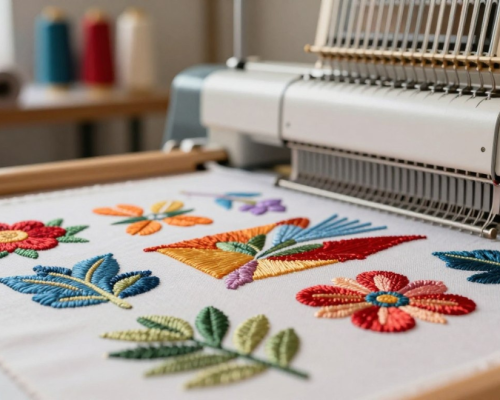
Choosing the right stitch is key for the right look and feel. Each stitch has its own role in the design:
- Satin Stitches: These are for borders and small text, giving a smooth, detailed finish.
- Fill Stitches: They cover big parts of the design, using stitches to fill in solid colors and add strength.
- Running Stitches: These are for fine details, outlines, or joining parts without adding bulk.
By using these stitches wisely, a skilled digitizer makes sure the final product looks great and holds up well. Knowing this technical process makes embroidery stand out as professional branding.
Navigating Essential Embroidery File Formats
Understanding digital embroidery files is key. Choosing the right embroidery file formats is crucial. It prevents mistakes and makes sure designs look great on fabric.
The Role of DST and EXP for Industrial Machines
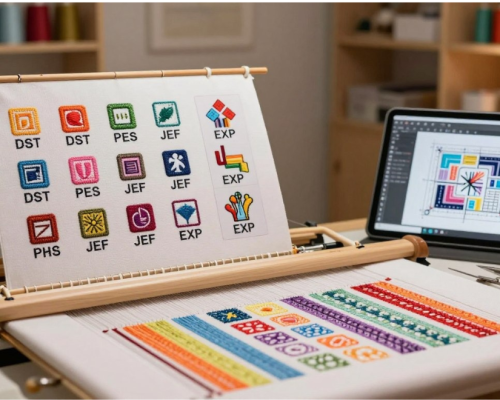
Industrial machines need formats like DST and EXP to work right. DST, made by Tajima, is a standard. It has all the stitch data needed, without special software info.
EXP is used for Melco machines and others. These files are highly reliable. They focus on machine commands, like needle position and thread trims. This ensures machines work well, even at high speeds.
Working with PES and EMB for Specialized Software
Home or commercial embroidery software uses PES and EMB files. PES is for Brother and Baby Lock machines. It has stitch data and color info.
EMB is for Wilcom software. It’s incredibly versatile. It keeps original design elements and stitch details. This makes editing and resizing easy without losing quality. Using these formats gives you more control over your designs.
Ensuring Compatibility with Your Embroidery Hardware
Matching your files to your hardware is best. Always check your machine’s manual for supported file types before starting production.
Using the wrong format can cause problems. It might lead to stitches that don’t line up or even machine errors. By focusing on compatibility, you make sure your embroidery file formats work well with your equipment. This results in a professional and polished final product.
Key Industries Relying on Custom Embroidery Files
Precision digitizing connects a digital logo to a real, high-quality garment. Many sectors use custom embroidery files to keep their brand look sharp and consistent everywhere.
Corporate Branding and Uniform Programs
Corporate settings value a clean, uniform look to win client trust. They often choose high-density digitizing for clear small text and detailed logos on shirts, blazers, and hats.
Using custom embroidery files helps businesses ensure every employee’s logo matches the brand. This uniformity is key for a professional look at client meetings and trade shows.
Promotional Merchandise and Retail Apparel
The retail and promotional fields need creativity and eye-catching designs. Designers use various stitch types to make textures that grab attention on clothes.
Quality embroidery is not just about the thread; it is about the design architecture that allows a brand to stand out in a crowded marketplace.
From unique streetwear to branded gifts, the digitizing process must consider fabric type and stretch. This ensures the final product feels high-end and lasts through many washes.
Sports Teams and Performance Gear
Athletic wear needs a special approach due to its technical fabrics. These fabrics are often light, moisture-wicking, and stretchy, which can cause issues if not digitized carefully.
Special custom embroidery files for sports gear aim to reduce stitch density to avoid fabric damage. This precision lets teams show their logos on jerseys and caps without affecting the gear’s function.
| Industry | Primary Focus | Key Requirement |
| Corporate | Brand Consistency | Legibility of small text |
| Retail | Visual Appeal | Texture and detail |
| Sports | Durability | Fabric-specific density |
How to Choose the Right Digitizing Partner
Finding the right partner for your embroidery digitizing services is key for any business. The quality of your final product depends on the digital file. Choosing wisely keeps your brand looking professional on all apparel.
Edit
Delete
Evaluating Portfolio Quality and Turnaround Times
First, check the provider’s past work. A good portfolio shows clean stitch paths and detailed logos. Look for consistency in handling small text and gradients.
Speed is crucial in today’s fast market. You need a partner with reliable turnaround times. They should give clear delivery estimates, helping you plan your schedule.
Assessing Communication and Revision Policies
Good communication is vital. Choose companies that answer quickly and keep you updated. A clear revision policy ensures quick fixes to your design.
See how they handle feedback. A partner who values your input will refine the file with you. This shows they’re committed to quality.
The Importance of Scalability for Growing Businesses
As your business grows, so do your needs. You need a partner who can scale with you. This means they can handle high-capacity projects without slowing you down.
Scalability also means keeping quality high with more files. Choosing a partner who grows with you is crucial. It ensures your brand’s excellence as you expand.
Step-by-Step Guide to Ordering Machine Embroidery Designs
Businesses can make their production smoother by learning how to order custom embroidery files right. A clear plan helps your final product look great and saves you from costly mistakes.
Submitting High-Resolution Artwork
Good quality starts with the source file. Always give high-resolution vector artwork like .AI, .EPS, or .PDF to your digitizer. Clear lines and defined shapes help the software get your logo right.
“Quality embroidery begins long before the needle touches the fabric; it starts with the integrity of the digital file provided to the machine.” — Industry Expert
Specifying Fabric Types and Garment Placement
Different fabrics handle embroidery differently. When you order machine embroidery designs, tell the exact fabric type. Also, say where the logo goes, like on a chest or sleeve. This helps the digitizer get it just right.
| Requirement | Preferred Format | Why It Matters |
| Primary Artwork | Vector (.AI/.EPS) | Scalability and clarity |
| Fabric Details | Material Composition | Prevents puckering |
| Placement | Visual Mockup | Ensures correct alignment |
Reviewing Digital Proofs and Stitch Simulations
Before starting, you’ll get a digital proof from your digitizer. This is your chance to check if the design meets your brand’s standards. Looking over these files helps spot problems before they’re stitched.
Image Idea: A screenshot of a digital stitch simulation showing the pathing of a logo.
A digital stitch simulation shows how the design will look. By checking the pathing, you can make sure the colors and stitch density are right for your clothes. This step is key to keeping your custom embroidery files consistent and your machine embroidery designs sharp.
Optimizing Machine Embroidery Designs for Different Fabrics
The secret to great machine embroidery designs is adjusting settings for each fabric. Each material reacts differently to needle tension and depth. So, customizing is key to quality.
Edit
Full screen

Delete
machine embroidery designs
Adjusting Density for Lightweight Materials
For delicate fabrics like silk or thin cotton, high stitch density can cause puckering. Reducing the density lets the fabric breathe. This prevents the design from becoming stiff.
Professional digitizers adjust stitch spacing. They make sure the fabric stays flat and smooth.
“Quality embroidery is not just about the art; it is about understanding the physics of the thread on the fabric.”
Managing Pull Compensation on Textured Fabrics
Textured materials like pique knits or fleece are tricky. Their uneven surfaces pull stitches inward. This can distort your machine embroidery designs if not fixed during digitizing.
By using pull compensation, you can make design elements slightly larger. This ensures they fit perfectly once the fabric settles.
Selecting Stabilizers for Professional Results
The right stabilizer is crucial for clean, professional results. The wrong one can cause issues or damage the fabric. Here are key factors to consider:
- Cut-away stabilizers support stretchy or unstable fabrics well.
- Tear-away stabilizers work best for stable materials for a clean finish.
- Water-soluble toppings keep stitches from sinking into high-pile fabrics like towels.
Choosing the right stabilizer for your garment is essential. It keeps your machine embroidery designs looking good over time. These extra steps ensure a polished look that lasts through washing and wear.
Common Challenges and Troubleshooting in Digitization
Creating high-quality logo digitizing is more than just the initial design. It also involves solving production challenges. Even with precise files, external factors can sometimes disrupt the embroidery process. Knowing these common issues helps businesses work better with their digitizers to achieve a polished final product.
Addressing Registration Issues and Misalignment
Registration issues happen when different parts of a design don’t line up right on the fabric. This can be due to fabric shifting or bad hooping techniques. If the fabric isn’t held right, the tension can pull it, making the design look off.
To solve this, make sure your digitizer includes pull compensation in the file. The right stabilizer for the fabric weight also helps keep it steady. Keeping the hooping pressure consistent is key to keeping everything aligned.
Solving Thread Breaks and Bird-Nesting
Thread breaks can be a big problem in logo digitizing projects. They often come from wrong top tension or a dull needle. If the thread keeps breaking, check your machine for debris or rough spots.
Bird-nesting, or thread gathering on the fabric’s underside, usually means uneven tension. If the bobbin tension is too loose, the machine can’t pull the top thread through right. Regular machine maintenance and using good thread can prevent these delays.
Refining Small Text and Intricate Details
Small text is a big challenge in logo digitizing because there’s little room for stitches. If the text is too dense, the thread piles up and becomes unreadable. A skilled digitizer will adjust the stitch density and use special underlay to keep the text clear.
For detailed designs, simplification is often the key to success. Removing unnecessary nodes or reducing color changes can greatly improve stitch quality. Always ask for a digital proof or a physical sew-out to check small details before a big production run.
Conclusion
Precision in embroidery digitizing turns simple logos into professional assets. These assets define your corporate image. Investing in expert services ensures your apparel reflects the quality your customers expect from your brand.
Do you have questions about your next project? Many clients ask if we support specific file formats like DST or EMB. Our team handles all major industry formats to ensure seamless compatibility with your embroidery machines.
Another common question involves turnaround times for complex designs. We prioritize efficient workflows to keep your business operations moving without delays. Reach out to our specialists to discuss your custom requirements and receive a tailored quote for your apparel needs.
Your brand deserves the best representation in every stitch. Partner with our experienced digitizers to achieve superior results that stand the test of time. Contact us now to start your journey toward flawless embroidery.
