Uncategorized
AI Embroidery Digitizing: Can Artificial Intelligence Replace Human Digitizers?
Embroidery digitizing has long been a specialized craft that converts artwork into stitch-ready files for embroidery machines. As technology advances, the concept of AI embroidery digitizing has gained attention. The question many in the industry ask is whether this technology can fully replace skilled human digitizers or if traditional expertise remains essential.
This article explores the role of AI in embroidery digitizing, its benefits, limitations, and how it compares to human craftsmanship. Whether you’re a business owner, designer, or enthusiast looking to digitize for embroidery, understanding this balance is crucial.
What is AI Embroidery Digitizing?
At its core, embroidery digitizing transforms digital artwork into a format machines understand, detailing stitch types, directions, and densities. AI embroidery digitizing refers to the automated process of creating these embroidery files using advanced software algorithms designed to interpret images and generate stitch paths without manual input.
This technology promises faster turnaround times and potentially lower costs. But can it match the nuanced decisions that experienced human digitizers make?
Benefits of AI Embroidery Digitizing
Speed and Efficiency
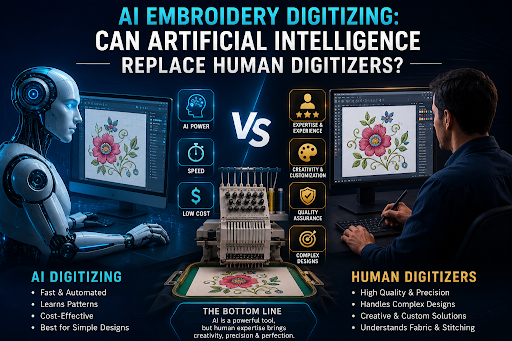
AI-powered tools can quickly analyze designs and produce digitized files in minutes, which is much faster than traditional manual methods. This speed is especially helpful for businesses needing high volumes of digitizing work done quickly.
Cost-Effectiveness
Automated digitizing can reduce labor costs, making it an attractive option for small businesses or startups with limited budgets.
Consistency
AI systems maintain consistent stitch patterns and densities across multiple designs, reducing the chance of human error or fatigue-related inconsistencies.
Accessibility for Beginners
For those new to embroidery, AI digitizing tools provide an easy way to convert designs without deep technical knowledge.
Limitations of AI Embroidery Digitizing
Lack of Artistic Judgment
Human digitizers apply artistic judgment, adapting stitch types, densities, and underlays based on fabric type, design complexity, and garment use. AI may struggle to make these nuanced decisions effectively.
Handling Complex Designs
Detailed or layered designs often require manual adjustments to ensure quality embroidery. AI-generated files might miss subtle details or produce inefficient stitch paths, leading to poor embroidery results.
Customization and Personalization
Human digitizers can customize files based on client preferences and specific project requirements. Automated tools often lack this flexibility.
Quality Control
Although AI offers consistency, it can also propagate errors if the initial interpretation is flawed. Skilled digitizers provide essential quality checks and corrections.
Why Human Digitizers Still Matter
Expertise and Experience
Human digitizers bring years of experience in understanding fabric behavior, thread tension, and machine limitations. They know how to optimize designs for different embroidery machines and fabrics.
Problem Solving
When a design doesn’t translate well to embroidery, human digitizers can troubleshoot and modify files creatively to ensure the best output.
Collaboration and Communication
Working with a human digitizing service allows for clear communication, revisions, and tailored solutions that automated systems cannot match.
Craftsmanship and Attention to Detail
The subtle art of embroidery often depends on the hands-on skill of digitizers who can enhance the design’s texture, depth, and overall appearance.
How to Choose the Right Embroidery Digitizing Service in 2026
Whether you prefer automated or human digitizing, here’s what to consider when selecting a service:
- Experience: Check portfolios and client reviews.
- Turnaround Time: Ensure timelines match your project needs.
- File Formats: Confirm compatibility with your embroidery machines.
- Revision Policies: Look for services offering edits and adjustments.
- Customer Support: Choose services with responsive and helpful teams.
When to Use AI Embroidery Digitizing vs. Human Digitizers
Use AI Embroidery Digitizing When:
- You need quick, simple digitizing for basic designs.
- Budget constraints limit manual digitizing options.
- You require consistent, repetitive patterns.
Opt for Human Digitizers When:
- Your designs are complex or detailed.
- Fabric type and garment placement require specialized knowledge.
- You want customized stitch effects or underlay.
- Quality and craftsmanship are top priorities.
Conclusion: Balancing Technology with Human Craftsmanship
The rise of AI embroidery digitizing presents exciting possibilities for faster and more affordable digitizing solutions. However, the irreplaceable value of human skill, creativity, and experience ensures that traditional digitizers remain essential in delivering exceptional embroidery results.
If you want to achieve high-quality embroidery that reflects your unique vision, partnering with a professional embroidery digitizing service is still the best choice. For straightforward projects or quick turnarounds, AI-powered tools can be a helpful addition.
Ready to bring your designs to life with precision and artistry? Explore trusted digitizing services today and find the perfect balance between innovation and craftsmanship.
